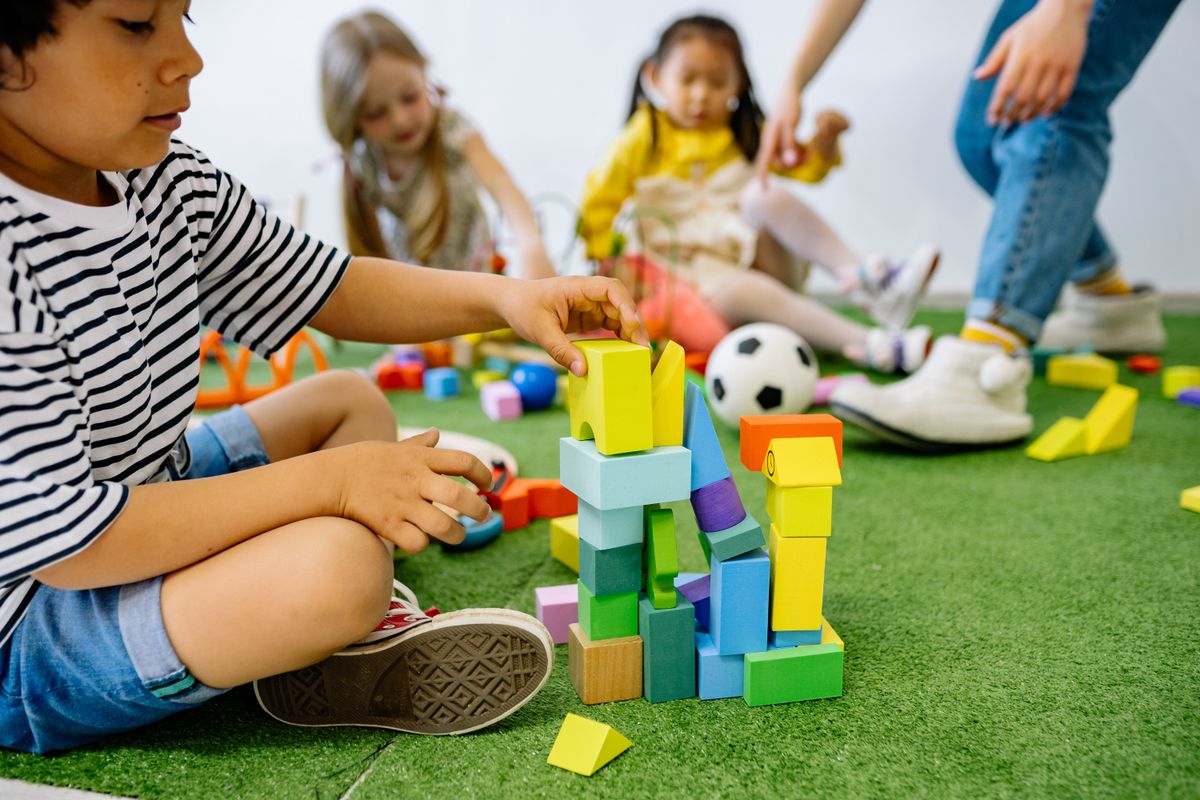
Watch a three-year-old build a block tower and you are watching physics, maths, and persistence in action. At Thistledown Tiny Learners, play is not the break between lessons — it is the lesson, carefully designed by teachers who know exactly which skills each game grows.
What children really learn at play
A single session in our home corner can include counting cups, negotiating roles, retelling a story, and comforting a "sick" teddy. Researchers call this rich, self-chosen play — and it predicts later reading and maths success better than early drilling.
How our classrooms play with purpose
- Provocations, not instructions. Teachers set out intriguing materials — shells, scarves, ramps — and let questions lead.
- Play partners, not directors. Adults join games to stretch language: "Your bridge fell! What could hold it up?"
- Time to go deep. Long, unhurried play blocks let children revisit ideas across days.
"Play is the highest form of research." Teachers plan it, observe it, and celebrate what it reveals.
Try this at home this weekend
Offer a cardboard box, tape, and safe scissors — then resist directing. Narrate what you see ("You're cutting a door!") and watch vocabulary bloom. Bring the creation to show-and-tell on Monday; our teachers will build the week's play around it.
See play-based learning in action
Morning visits run Tuesday to Thursday.